
More symptom information
Learn more about specific symptoms of this leukodystrophy in the pages listed here.
Also known as: CSF1R BANDDOS
CSF1R related leukoencephalopathy is caused by mutations in the CSF1R gene. While there are genetic similarities, there are two forms of the condition, early and late onset. The early onset form of the condition is called Brain abnormalities, neurodegeneration, and dysosteosclerosis (BANDDOS). It is an autosomal-recessive form that manifests earlier and more severely, often from birth or infancy. It typically presents with progressive neurological symptoms, including cognitive decline, speech disturbances, muscle rigidity, brain calcifications, and structural abnormalities. Treatment options vary based on the form and stage of the disease, and management focuses on addressing symptoms and supporting the patient’s well-being.
A new diagnosis can be overwhelming as it brings unique challenges and adjustments, but it is important to remember that you are not alone.
The early-onset form of CSFR1 BANDDOS, is caused by mutations in the CSF1R gene. These mutations disrupt the tyrosine kinase domain, essential for cell signalling. This disruption can result in severe brain abnormalities, developmental delays, and skeletal deformities.
Autosomal Recessive: In autosomal recessive conditions, two copies of the genetic mutation are needed to cause the condition. We all have two copies of every gene, one from our mother and one from our father. The parents of someone with an autosomal recessive condition both carry one copy of the gene with a genetic mutation. Therefore, someone with an autosomal recessive condition has two copies of the genetic mutation, one copy from each parent. Each child of parents that both carry the genetic mutation will have a 25% chance of having the condition, a 50% chance of carrying the genetic mutation (like the parent), and a 25% chance of not having the condition.
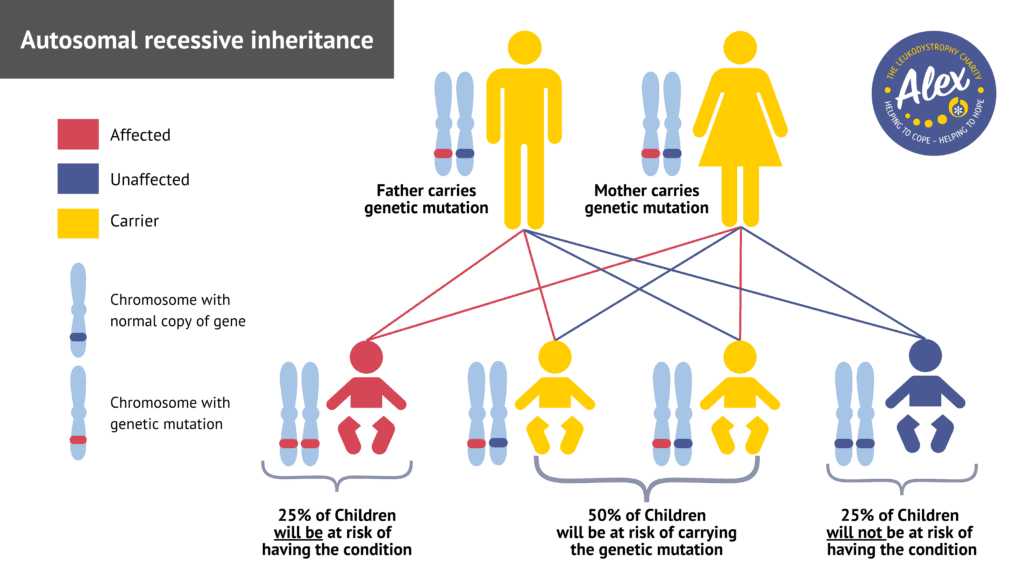
Genetic counselling is essential for affected families due to the inheritance pattern of the condition. This is available at hospitals and Regional Genetic Centres. Please contact your doctor if you have any questions.
Learn more about genetic testing and counselling here.
Common symptoms in BANDDOS include speech disturbances, cognitive decline, muscle rigidity, seizures, and difficulty swallowing. Patients often present with brain calcifications, white matter changes, and structural abnormalities like agenesis of the corpus callosum (full or partial absence of the structure that connects the two halves of the brain) and Dandy-Walker malformation (abnormal development of the brain, primarily the cerebellum which controls body movement).
Learn more about specific symptoms of this leukodystrophy in the pages listed here.
Although there is currently no specific treatment for this leukodystrophy, there is condition management information that may be useful for you in managing your or your loved one’s leukodystrophy.
There may be a current clinical trial, natural history study or patient registry for your condition. Check our current research page and ask your specialist doctor for more information.
We understand that research is a significant priority and source of hope for the leukodystrophy community. There is more research in leukodystrophy now than ever before. Alex TLC actively promotes and supports research in a number of ways.
Every month we update our database of research summaries with the most recent research. This includes summaries of leukodystrophy articles, clinical trials and pharmaceutical press releases. Our summaries allow our community to read about relevant recent research developments in a format that is easily understood.
Learn about the ways in which we can help in the how we support you section. When you or a family member been diagnosed with a leukodystrophy it may be difficult to know where to go for more advice – this information could help.
Our services and equipment section is here to help leukodystrophy patients and their families manage their condition. All information is based on our knowledge of UK services, however, our team are happy to receive support requests from other countries – email us.
You may be introduced to many different medical professionals which you may find confusing. View our guide to the health and care professionals you may encounter, with short descriptions about what they do.
We take great care in only selecting credible, useful links and resources, however we cannot be held responsible for the content of external websites or other sources.